The sound of the dial up was like an alien translation machine. That was my first thought, sitting at our ACER desktop as AOL logged me online. Already being strangers to the norm as homeschool kids who had started a band our single room in the house was the epicenter of everything from math homework to songwriting. The internet had arrived and it was clunky. Like so many of us I felt the excitement of the iconic “you’ve got mail” as the first email address was getting assigned. At this point our band was still the local HANSON Brothers trying to get fans to show up and fill a block party or a community arts festival, building mailing lists with Kinkos printed fliers and a lot of stamps. Locally we had launched our “Hanson Hotline” which was populated by Isaac dutifully recapping all the events coming up in the next week or month. I can remember countless mornings with Isaac reading and re-reading the message getting it just right. He was always preparing for his real desired calling as a morning DJ or podcaster. Maybe he will one day realize this dream.
Up the half level carpeted stairs was the office, schoolroom, music room and each of the brothers (the eldest) had desks set up. Along the back wall was a standalone room inside of this den-like space which we had built to have a more private practice room for piano and songwriting. That room was built by our dad along with help from our precise uncle James who was a builder and contractor plus a bit of child labor help from the three Hanson brothers. This room was a mini studio room complete with a glass window you could see in and out of and otherwise built almost entirely of composite wood which was meant to absorb sound and be a barrier for sound going in and out. The room had a heavy door which our Dad cleverly had attached for a handle, a long metal pipe which served as an industrial stile handle making it possible for small people (us) to open such a heavy door. When we built the room, I was filled with excitement. To me we had built a recording studio in our house. It was not the whole picture but it was a step toward the archetype I had seen of recording studios and I felt like I was a king sitting in that room. The tiny room was missing some elements, namely any airflow from the outside which we did not fully realize until it was completed and were sitting inside it during a summer July day beginning to cook. Upon realizing the missing link in the chain of our plan there were two circular holes cut at the bottom of the walls allowing airflow (and somewhat comedically removing a good amount of sound separation.
This room say directly across from the ACER computer. This room was where I would sneak in the dark of night to write down or sing over a song idea that was bouncing in my head waking me up from a dream. This room I could sit in and look at the bustling room across as siblings gathered at their desks or attempted to download a file from the new internet or checked a message board. We were standing at the edge of an era, the analog world was fading into the background and the digital interconnected, internet age was beginning and we had a front row seat.
As we began attracting new supporters of our little neo-soul-rock n roll-gospel-pop trio, we also had a series of new ideas being born. Our neighbor Harry, just to the west of our home in Tulsa through the wooded gap of a half-acre was a bit of an early adopter with the use of HTML and basic programming and he was curious about our little band. His parents were lifelong artists and he was just a few years older than Isaac so the elder neighbor perspective was headed by a couple teenage dreamers. Along with our neighbor we had another good friend Ashley, also a few years our elder that was endlessly capable at seeing the next thing coming in technology and with a knack for comedy and love of music, he was along with Harry one of the first people to preach the gospel of the internet. We had a tangible way to get new fans with our mailing list signup at each show and a monthly mailing which required a lot of stamp time, but it seemed to work. Both these high-school age guys who were looking into the future said correctly, we really needed to get a web site going. “In the future everyone is going to use the internet and email and even schools are starting to use the internet.”
We were observing the growth of a new world, one that at the time seemed hard to imagine. In this new world we would connect directly to one another without gatekeepers in print, TV or radio. We would be able to share our passions with one another in a new format that was unrestricted. Of course, this wild west would only last a minute, but the possibilities were endless.
Our neighbor to the south was a self-described ‘nerd’ and was my same age. He was the first person to show me a chat room. Like coming right out of a coming-of-age novel he brought me to his room where he had D&D set up and was building an erector set and introduced me to a chat room on the same subjects. I was fascinated by the live dialog that was going on in front of me. The chat looked like a DOS program with black and white lettering and no graphics and I could hardly keep up with the flow of linear chats streaming across the screen. I thought to myself, I guess I really need to learn how to type.
The internet age was upon us and I could hardly type.
In the coming couple years our band adventure took us from the upstairs school room, into the living room to take over the house with our band, then to the garage where we built out a full rehearsal space and storage for merch and gear. We were slowly taking over the whole house with our little endeavor of music and only a couple summers later we were signed to a record deal living in the Hollywood hills to record a proper album for the first time.
One of the amazing things to witness as a musician in the late 90’s was how robustly the world we were stepping into was completely ignoring the internet age. Being so young, we were connecting with technology at its infancy but the ‘cool bands’ were in the late teens and twenty’s and the executives were in their 30’s and up and the whole business was drunk with the power of the radio, TV and print age. The music business was selling CD’s at the highest rate ever, fueled in part by a transfer of catalog sales where LP fans were now buying CD’s that they already owned as a record. The corporate radio market was booming and the live music scene with larger conglomerates of music venues, theaters and arenas was reaching its highest gross. The music business was really high on itself and we were getting in on the last breath before the change.
The world of recording world was transitioning out of the analog into digital as well. For decades the format of recording was primarily tape machines. The industry standard was two inch (two inches wide), multi-track tape. This means the sound is captured through magnetized tape heads and you are able to record individual parts with up to 12 per tape. This means twelve individual parts, that’s all. When you wanted more individual parts, you paired two machines together so you could have 24 at once. In some cases multiple machines would be utilized, but the primary way you would get more tracks is that the multi-track recorded parts (like drums) would be balanced and then bounced down to a rough mix (or a final) so the drum balance was set and then that would only take up a stereo pair of tracks leaving the remaining multi-track so on the tape for more overdubs. This process continued as you attempted to grow the recording. Things like analog space for individual track recording changed the process of sound arrangements. It changed what ideas you could attempt, what ideas you rehearsed or prepared in advance in pre-production and ultimately the budget of the project because having physical tape meant having engineers and recording equipment that was mostly quite expensive and not available to the average music creator. These more expensive formats created a larger gap between the simple demo at home and the final recording.
On Middle Of Nowhere we saw the transition begin. Working at the initial studio where we captured a lot of the foundation of that album sitting off Ventura Blvd. in Studio City at Scream Recordings, I remember the couple days we had a ‘pro-tools-guy’ come by to do some digital edits. Our primary producer for that record Stephen Lironi was more advanced than most in using digital production, drum sequencing and digital editing on platforms that were mostly used for beat making, but the resolution of general audio recording like vocals and guitar and live piano etc. was not high enough to lean on the digital platforms as a new standard for recording. During that album the program was transitioning from 8 bit to 16 bit and that was starting to make it a viable option for bringing full audio recordings into the platform for editing and tweaking. Calling in the ‘pro-tools-guy’ was like calling in the specialized surgeon. It was not as much a fixer as it was a special time saver or a resource that was now able to be used on the cutting edge. The analog world as the dominant force was at its last chapter.
By the next full album recording in 1999 the launch of the digital revolution was in full swing. Our albums were recorded fully on pro-tools instead of tape allowing for a lot more flexibility and the world we were all releasing music in and connecting with fans through was the .com era.
At the peak of the HANSON global reach following Middle Of Nowhere our website at the time Hansonline.com was the second most trafficked music site on the internet, behind MTV.com For those that were there in this time you know that MTV was the most dominant brand in music, driving the cultural relevance of whatever was on that channel and of course for a brief period online. We observed as dinosaurs were unable to evolve like MTV which thought their future was in reality TV instead of promoting the music that gave them their name. Instead of cultivating that relationship with an industry they held to the spike in engagement they saw with things like The Real World, Road Rules and The Osbournes (which were fun), and drifted further and further from music itself to things like Teen Mom and Jersey Shore. The platform that could have led to a whole new era of digital music with a new platform played to the short-term thinking and was left in the annals of history losing its relevance to the next generation of music fans. There is more to say on this subject, I digress.
From the time of that first AOL address the summer of 1999 to making our second album This Time Around felt like a different world, because it was. We had seen our music reach people around the world and we had watched the technology emerge allowing for connection with fans in different corners of the planet and something that we could not have anticipated was the growing community.
Admiring bands like U2 and the Grateful Dead for their dedicated fan bases and the different ways that they kept them engaged, we had launched some non-digital tools which were meant to engage this growing community through the analog format. The now iconic (in HANSON world) era of MOE Magazine. This magazine was a newsletter on steroids with creative images articles, photos and information that was meant to capture a feeling about the band and our community.
I loved writing the articles about our experiences and reflecting on the aspects of our world that were hard to capture in a short interview or in the format of web sites at the time that had limited design capabilities and graphics. MOE (Middle Of Nowhere) was a little look into a look and feel that was coming from our band and culture. This magazine was a companion to the growing digital community now on Hansonline.com There on the web we had chat rooms, forums and a growing interconnected grouping of fans in different parts of the world. We loved the membership to this magazine but it was a one-way conversation. Over the previous three years we had received tens of thousands of physical letters, gifts and cards from fans and had met so many in person. We knew there was a lot more than a one-way conversation to be had.
The only thing that is a constant, is change. Looking around it was like every element of our world was transitioning into a new era. This theme is one that I have now seen a few times. If we wanted to keep building a membership for fans that was reflective of the community we saw in person and through so many communications via mailings, we needed to look at what we could do with a digital membership.
In 1999, we began a new era of offering something that at the time felt like a huge leap. We would put together a digital membership, an online Fanclub. This Fanclub would allow us to offer special content that would be dynamic and allow for better communication with fans all over the world. We could set up forums for fans to talk to one another, help organize street team conversations, create a place for ongoing content from the band ranging from text blogs (a term that was just emerging) to videos, live chats and of course importantly a calendar for events and activities and a chance to let the most devoted fans get first shots at tickets and pre-sales for shows. So many of the things we wanted to do are total commonplace for the world now, but at the time it was a very robust and somewhat risky proposition. Remember so many of us had terrible internet that could hardly watch a video online. We had virtually no platform to download or get digital music out in the world and most people were still buying their music at physical stores. Speaking of stores, very importantly we had the ability to offer a dynamic and custom online store. This aspect of E-commerce was something that was changing the world of retail in all industries and this was a new era for our band as well. We could have a place to offer the merch we wanted to sell and you didn’t have to be at a show, or send a physical mailing to request it from a catalog or magazine. With all of this known, we also could see how we were all communicating differently and we knew our magazine could only do so much.
Those that were there for the launch also know we not only built the features for the community, but we also offered web hosting for individual fan web sites, email hosting and more. Hanson.net was a dsp for many people still deciding how to live in the digital era. I hardly understood it, but I loved what I barely understood. I loved that we were on the front end of a new era. This is something I have always been inspired by.
One of the great gifts of our experience working in music since we were so young was our ability to grow and try things with fresh youthful thinking and in some ways not feeling the pull of ‘the way things are done”.
Part of why we saw the opportunity to do more and try different things with technology along with several guys just a couple years older than we were (our neighbor and our friend from Tulsa) was that exact reality. We were teenagers, experiencing the world and feeling the opportunity of the future. Our business was not at all thinking about how to build community or find fans that were already active or offer cool merch or resources to people in far off places. Our industry was drunk on their control and the income they saw coming from record sales, radio play, tv and print media marketing and the overall growth of the business of brick and mortar. The music business really didn’t think it was going to leave the analog world behind, as a result they were left behind.
This Time Around was a pivotal album as many who have been with us know. The record was one we were immensely proud of and it did quite well compared to many of the albums released by so many artists but not compared to our first record. So quickly we heard from our major label that we were not going to be a priority for the label, which meant marketing support.
Six weeks after TTA was released, we were in NYC. We had left Total Request Live in NYC, the dominant request show for music videos with their iconic live show looking out on time square. With thousands of fans waiting in the street and voting online for videos, the HANSON videos for If Only and also This Time Around were dominating the request list. Despite this, the record label was getting a lot less support from radio so they stopped pushing HANSON at radio and started using our presence as a tool to help promote other songs on their roster (HANSON will show up at your radio station, if you will add the Sisqo record, Thong Song), that’s really what was starting to happen. Though our fans were showing up everywhere, we were now seen as a damaged brand by the label and our work was somehow not translating to growth of the record. We didn’t know at the time the whole story, but it was clear we were at odds with the organization.
Leaving the MTV studios, we returned to our hotel room just off Columbus circle and our executive team from Universal were there to meet with us. Lyor Cohen, Jim Caparo and Jeff Fenster gathered us to say we were a ‘damaged brand’ and that we could not get the album to succeed. They wanted us to focus on making a change and for me to make a solo album.
Every bone in my body was revolted. At 17 years old we had sold nearly a million albums on our second record. We had a global fan base with fans who had bought millions of records. We had written and produced albums which were nominated for Grammys and were surrounded by a dedicated and engaged fan base which was much more than a pop-audience. We saw all these things clearly. For me, outside of even the brothers I can say I was furious. To think we would be told we had a damaged brand by these corporate heads of state while our music was barely even having a chance to get promoted and that I would even consider throwing that away and entertain trusting this same group to get behind me as a solo artist, leaving my brothers, our band and our fan base as if it had no value…this was not only insulting it was to me foolish. Of course, the chess game could have been played differently, but in that moment, I just had one message.
I gave the room a polite dual one finger salute and said the whole idea was insulting and would not be considered.
From that moment on, we were quietly fighting a new battle. Once again, maybe we could have done it differently, but we believed in what we were doing, and what I knew was that we had fans all over the world who were with us.
We dedicated ourselves to trying to keep engaged with many fans online, we worked on setting the course for a full US tour and we also incorporated international touring specifically in Latin America. That year, we really became the band we are today.
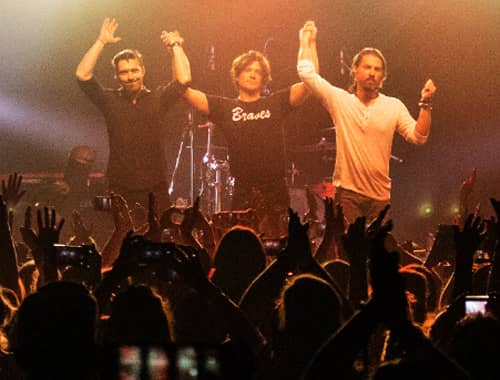
Starting with that tour I could feel a new dynamic happening. We were not selling arenas but were still selling out theaters and the connection in the room was powerful. We changed the set every night and packed rooms like the Ryman in Nashville and the Wiltern in LA. We had a depth of connection to the fans showing up and I loved every second of it. In the background I was screaming with frustration and determination to prove our label wrong, but when it came to the music and the show and the connection I knew there was nothing to prove to them, it was clear and it was without question. Music Is Connection, and we were seeing that in the flesh.
The dynamic between digital and physical was now a going concern. We had in the background a growing digital relationship with the website Hanson.net and the Fanclub offering. We had the online store and activity online both on the public and private site. We had special music offered each year to members and we had meet and greets, chats and forums for community. We even had an online magazine with articles and notes on the fan community helmed by members of the fanbase.
What was occurring around us was organic and living beyond the band. This foundation would allow us to make further leaps and take further risks in the future. This community would be a bridge that allowed the next 25 years to thrive (and survive).
Into the coming early 2000’s I’ve reflected on some of the factors that came to be which defined the next era for the band. Underneath struggled to be made and was then completed (check out the Rick Ocasek story if you have not read it). We started a label, 3CG Records, built an international independent release plan and we stepped into a whole new era of HANSON.net
While the web site in this new digital era had very little activity in the Underneath album making process due to so many questions and delays and challenges which were behind the curtain, the site and the community was still there. As we evaluated the start of that new era of the band and deciding to leave Universal and go into the independent field, we had something behind us, some people with us. We knew we had members of Hanson.net.
Looking at our plan for a new release of Underneath, we worked to re-design the site and build a new set of features to take Hanson.net into the Underneath age. We painted the picture with the Underneath aesthetic and prepared to kick off the next chapter of the site with a new focus on special experiences (Underneath Acoustic Live recording in Tulsa Oklahoma at the Church Studio), more consistent meet and greets before shows with fans, and even interviews with a ‘hanson.net reporter’ before each show. We had changed a lot of things but having that site thriving and being updated to reflect the new era we were in was essential.
I remember sitting in the apartment in NY that we lived in, in Tribeca as we were building the infrastructure for a new label and reviewing designs for this web site. Looking at every piece of text and funny glitchy feature. The design looked like the underneath album with LP’s and headphone cables drawn across the top menu and we worked to make the site more dynamic than before because we finally had new content to share. When we told the world in 2003 that we were leaving Universal and starting a label everyone thought we were nuts. Maybe we were, but I had seen the view from the top and it was not so good. The engagement and connection with the global online Hanson.net community was a thread that helped us to know we could take a leap, so we did.
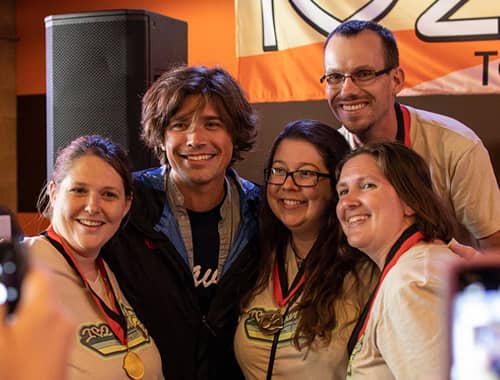
Since we started the Underneath era in 2003 with the web site, tour and following full release of the Underneath album in 2004 many of our traditions of content and engagement have been maintained. Approximately 750 Meet and Greets were done with about 7800 Fanclub members. More than 750 Fanclub reporter interviews (some of our favorite interviews ever done), plus new traditions that were aided by technology and excitement of growing community possibilities.
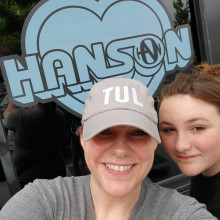
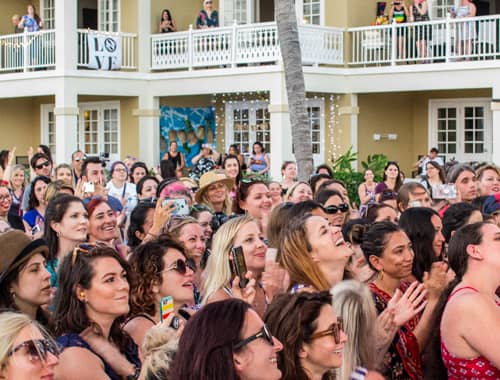
We began joining our community in hosting and celebrating our annual HANSON Day in May, which over the past couple decades became a gathering of community and love in our hometown. We stepped up our content offering by making a specific EP each year for members written and recorded each year just for the fan community, featuring approximately five new, exclusive songs. We leaped in to doing more streaming content and tried to even do early streaming with mobile activity before phones could do livestreaming with our ‘Detour”, during the Shout It Out album. The creative ideas, Christmas Specials, livestreams behind the scenes during creative projects, Podcasts, and even the digital meet and greets all came through or around the Hanson.net community and site. So many bad jokes. So, so many.
Thankfully we live in a physical world. We live in a world where we can touch and feel and travel and connect in person. We can hop on ferries and planes and automobiles and saddle up a horse. We can meet with one another in a coffee shop and share a great meal. We can gather to share live music in a place and know that in that very moment in the universe that is something that that group will share for eternity. We are together in the NOW. I have always felt that the power of the digital age and the internet connectivity we have had is there to AMPLIFY our human experience, not to replace it.
I am proud that Hanson.net has been a bridge for us all to keep things alive and thriving. We have stayed connected and connecting to music and one another. We owe so much of what we have been able to do to the power of connection through technology and community. THANK YOU!!!
What I know is true is that community and connection is bigger than any one app or specific membership. When we find our tribe, we know it breaks barriers. I believe in the power of our new innovative tools and I also believe that when we use them to their greatest potential, just like innovative technology has increased our experience of music and film and art through immersive experience, HD visuals and sound and shareable content around the globe, the real power of innovation is to increase our humanity. The ability to share more with others we love, to invite more people to come together for a cause, to capture things so we don’t forget or to photograph a moment or a monument or a minute that will never come again. These are all reasons to love innovation and the tools that are coming to be every day.
We may be moving into an increasingly digital age of AI and satellites and bits and bytes growing increasingly integrated into our existence, but I’ll be endlessly obsessed with how we can bring all these things together to make us more human, more inspired, more adventurous, more connected. If these tools are not there to help us live better and be in the NOW, why build them at all. It may be a digital age, but I think it will always be an Analog Future.
Let’s go!
-TAYLOR H









MDTROXY
Roxanne Myers / Newburg, PA, US
Wow! Taylor, there is a lot to unpack here. THANK YOU for sharing all this with us. I had no idea what the label tried to do with you guys in 1999. I’m glad you gave that a big Fyou. You guys were right in continuing to connect us all online. We are a community with our favorite band at the heart of it. Whatever the future holds, I know you know we are not going anywhere 💕
Posted Mar 1, 2026 04:19:31 PM